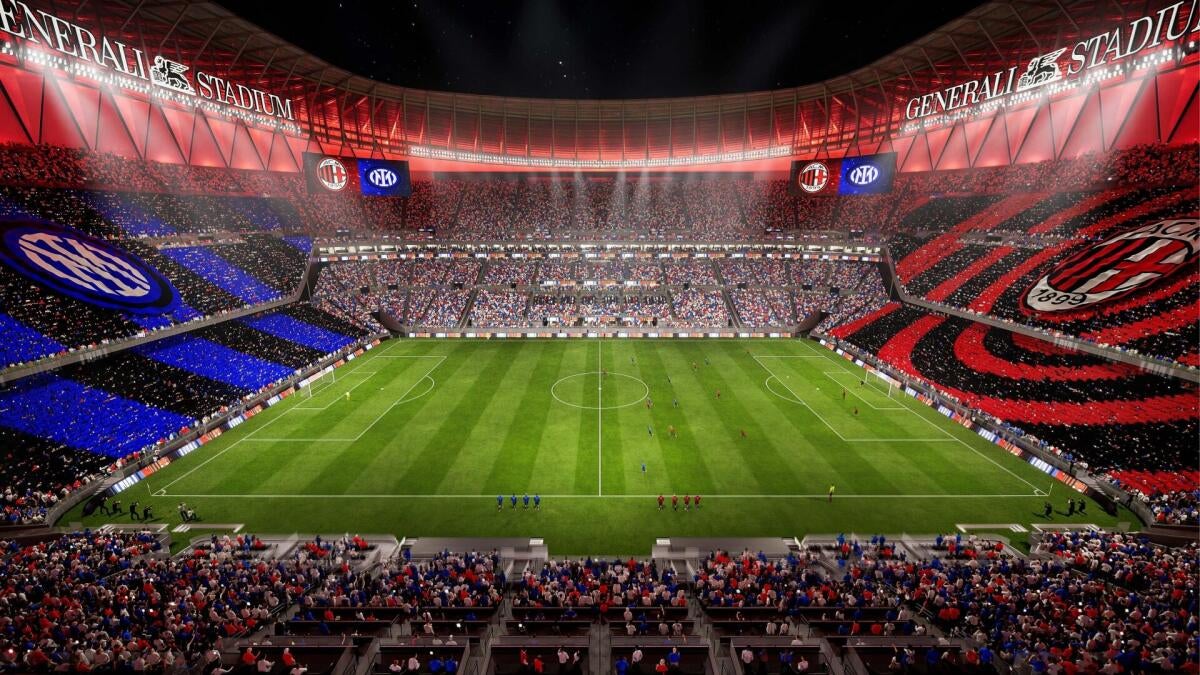
Inter and AC Milan have officially unveiled the project for a new 71,500-seat stadium that will replace the iconic San Siro. The venue will be named Generali Stadium after Italian insurance company Generali acquired naming rights in a deal worth €650 million ($725 million) over 20 years. Construction is scheduled to begin in 2028, with the stadium ready for the 2031-2032 season, in time for the UEFA Euro 2032 co-hosted by Italy and Turkey. The current San Siro, built in 1926, will be demolished only after the new arena is operational.
Design and Features
The stadium is a joint architectural vision by Foster + Partners and MANICA, led by Lord Norman Foster and David Manica, who previously collaborated on London's Wembley Stadium. The design features a striking X-frame structure and a sweeping double-curved roof intended to become a new Milan landmark. Two seating tiers form a continuous 360-degree bowl, with the Curvas at each end rising as steep, single walls with seating inclinations up to 37 degrees to amplify atmosphere. Acoustic engineering aims to capture and intensify crowd energy, while enhanced accessibility, modern hospitality, and diverse seating options cater to all generations of fans.
Investment and Tradition
The project represents a defining investment by club owners RedBird (AC Milan) and Oaktree (Inter) to strengthen sporting competitiveness and shape the next era of Italian football. The two clubs will continue their unique tradition of sharing a home stadium, which began when Inter moved to San Siro in the late 1940s. In 2025, the Milan City Council approved the sale of San Siro to both clubs, paving the way for this development.
Historical Context
San Siro has hosted memorable sporting and cultural events beyond football, including the opening ceremony of the 2026 Winter Olympic Games and concerts by artists such as Bob Marley, the Rolling Stones, David Bowie, Michael Jackson, Madonna, Taylor Swift, U2, and Bruce Springsteen. The new Generali Stadium aims to drastically increase match revenues for both clubs, bringing them closer to European rivals, while preserving the legacy of a stadium that has been a landmark far beyond sport.