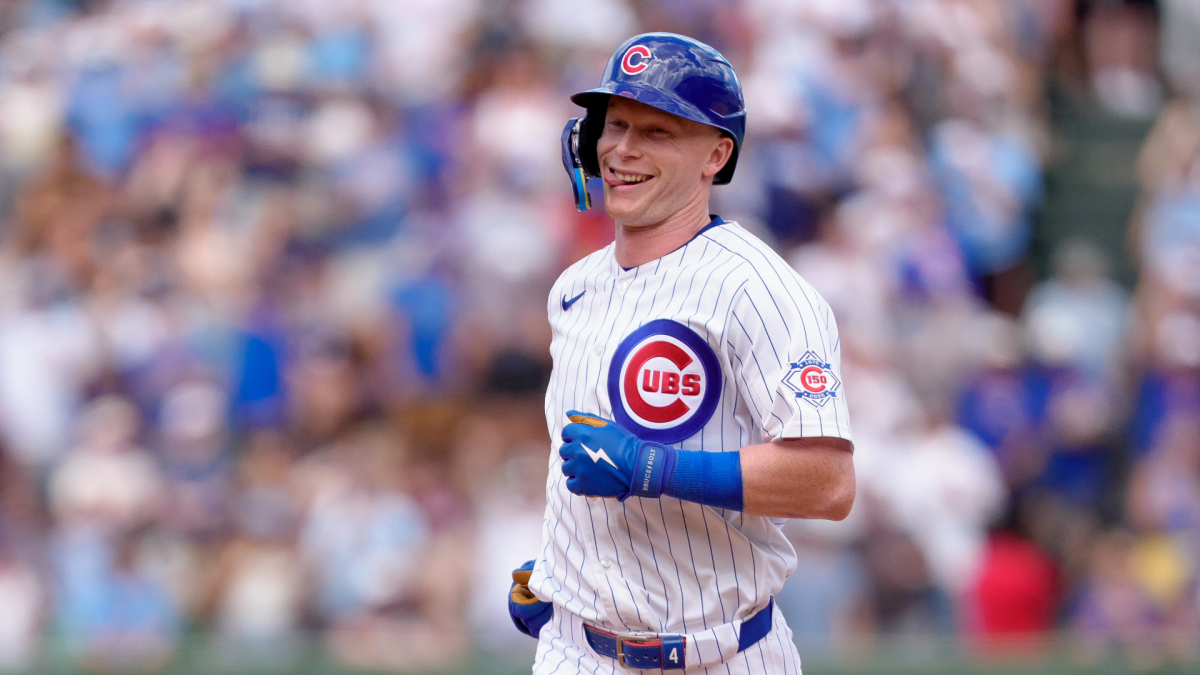
Cubs' Pete Crow-Armstrong Wins 2026 NL MVP Unanimously
Chicago Cubs center fielder Pete Crow-Armstrong has been named the 2026 National League Most Valuable Player unanimously, the Baseball Writers' Association of America (BBWAA) announced Thursday. Crow-Armstrong received all 30 first-place votes for a total of 420 points, becoming the first unanimous NL MVP since the current voting format was adopted.
Historic Season Leads to Unanimous Honor
Appearing in all 162 games, Crow-Armstrong posted a .280/.372/.570 slash line with a 156 OPS+, 31 doubles, eight triples, 45 home runs, 107 RBI, 119 runs scored, 41 stolen bases and a major league-leading 9.8 WAR. He led the majors in WAR, runs, home runs and total bases, while pacing the National League in slugging percentage, OPS and OPS+. His 45 home runs and 41 steals made him just the seventh player in MLB history to join the 40-40 club. Advanced defensive metrics also rated him among the game's elite outfielders, capping one of the most complete two-way seasons by a position player in recent memory.
Los Angeles Dodgers superstar Shohei Ohtani finished second with 26 first-place votes and 264 points. Ohtani hit .275/.377/.512 with 26 doubles, four triples, 30 home runs, 81 RBI, 89 runs and 11 steals (3.2 WAR) while also going 8-2 with a 1.79 ERA, 0.95 WHIP and 95 strikeouts in 85 ⅔ innings on the mound (3.2 WAR). Milwaukee Brewers second baseman Brice Turang placed third with 190 points after a .268/.366/.450 season (124 OPS+) featuring 37 doubles, three triples, 21 home runs, 100 RBI, 102 runs and 7.3 WAR alongside Gold Glove-caliber defense.
Crow-Armstrong joins an illustrious list of Cubs MVP winners that includes Kris Bryant (2016), Sammy Sosa (1998), Andre Dawson (1987), Ryne Sandberg (1984), Ernie Banks (1958, 1959), Hank Sauer (1952), Phil Cavaretta (1945), Gabby Hartnett (1935), Hack Wilson (1930), Rogers Hornsby (1929) and Frank Schulte (1911).


