Can Carson Beck Convince the Cardinals to Pass on a Quarterback in the 2026 Draft? He Has Eight Games to Prove It
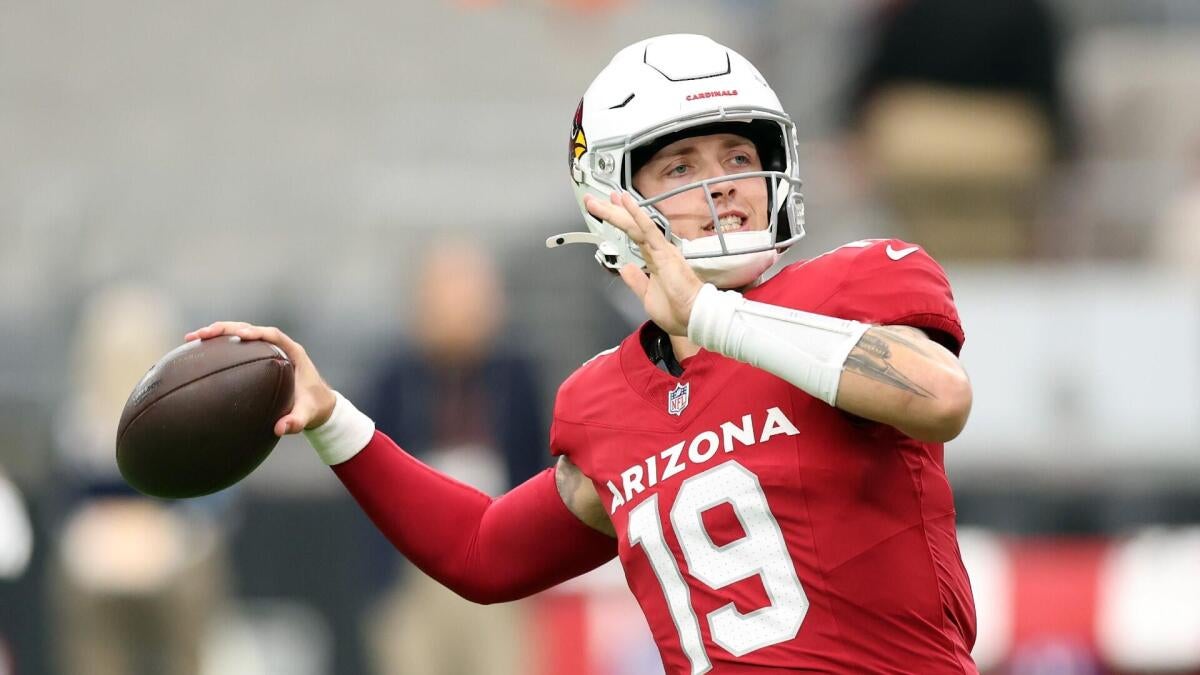
Third-round rookie Carson Beck is set to make his NFL debut for the Arizona Cardinals this Sunday against the Rams after injuries sidelined Jacoby Brissett and Gardner Minshew. With eight games remaining, Beck has a franchise-altering opportunity to show Arizona they do not need to use a likely top-10 pick on another quarterback next spring.
Beck entered the league with a reputation as a safe, efficient passer. At Georgia and Miami he started 43 games, posted a 38.6% first-down rate (95th percentile among draft-eligible quarterbacks from 2015-26), and threw screens on over 32% of his attempts while facing pressure on just 19.1% of dropbacks — the lowest rate in over a decade. The question now is whether that high floor was a product of talent, surroundings, or both.
Historical context for late-starting rookie quarterbacks
Since 2007, 24 quarterbacks drafted in the third round or later made their first start after Week 7 of their rookie season. Only eight started at least four games as rookies, and just three — Nick Foles, Desmond Ridder, and Brock Purdy — started at least eight games the following year. Sam Howell was the only quarterback with fewer than four rookie starts to achieve that.
Six of those eight improved their yards per attempt between their first two and final two rookie starts, but improvement did not guarantee long-term success. Ridder, for example, went from 5.3 to 7.0 yards per attempt but was benched twice in 2023 and traded; the Falcons then drafted Michael Penix Jr. eighth overall in 2024. Purdy maintained elite production (8.6 yards per attempt) and became one of the league's best quarterbacks.
What teams did after similar auditions
Five of the eight teams did not draft a quarterback the following spring, yet several selected one within the next two years. The Cardinals themselves passed on quarterbacks after starting John Skelton (2010) and Ryan Lindley (2012), instead trading for veterans Kevin Kolb and Carson Palmer. Tennessee used the No. 2 overall pick on Marcus Mariota after Zach Mettenberger's six starts, while St. Louis took Sam Bradford first overall after Keith Null's four starts. San Francisco's situation differed: they had already drafted Trey Lance third overall in 2021, but Purdy's success made Lance expendable.
Tyler Shough as a potential blueprint
A more recent parallel is Tyler Shough, selected 40th overall by New Orleans in 2025. He took over in Week 9, went 5-4, completed nearly 68% of his passes, and showed he could run the offense without excessive protection. That performance convinced the Saints to pass on a quarterback in the 2026 draft and use the No. 8 pick on wide receiver Jordyn Tyson.
Scheme fit and challenges for Beck
Arizona's offense may suit Beck: 58.8% of passes have been thrown within five yards of the line of scrimmage, and the offensive line has allowed pressure on only 31.1% of dropbacks (fifth-lowest in the NFL). Beck's accuracy, anticipation, and quick processing should translate in theory. However, the Cardinals rank 28th in yards per play, and neither Brissett nor Minshew consistently turned short throws into meaningful production. Beck must convert those manageable throws into first downs and points, and demonstrate he can push the ball downfield, sustain drives under pressure, and avoid costly mistakes.
Preseason projections had Beck averaging 6.9 yards per attempt with an 85.8 passer rating — an improvement over Arizona's current quarterback play. But the real test is whether he gets better over the next two months. The Cardinals don't need eight straight wins, but they need to see how Beck responds when defenses take away the easy options. With a possible top-10 pick awaiting in April, the stakes are high for both the rookie and an organization that last posted a winning season in 2021.


