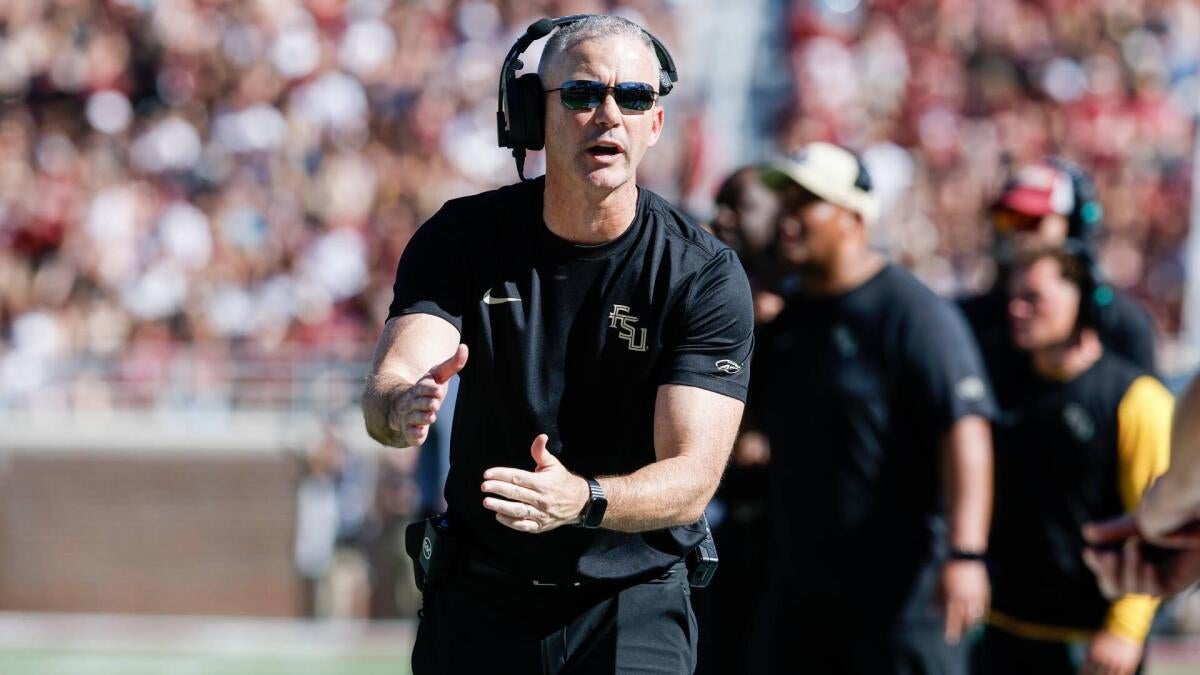
In college football, the buyout clause in a coach's contract is often the most critical financial line item, determining how easily a school can part ways with a coach and how long the financial obligation lingers. While headline-grabbing figures like Jimbo Fisher's $76.8 million buyout from Texas A&M dominate attention, the reality at lower-resource programs tells a different story.
The Fine Print: Mitigation Clauses
The actual payout is rarely the sticker-shock number because of mitigation clauses. For example, when Sam Houston fired offensive coordinator Phil Longo in October, his remaining contract was worth roughly $1.53 million through 2028. However, his contract includes a standard offset provision: for every dollar Longo earns in a new coaching job, Sam Houston reduces its buyout payment dollar-for-dollar. If he lands a higher-paying Power Four coordinator role, the school could owe nothing. Such clauses are boilerplate across college football, designed to prevent situations like Texas A&M's massive payout.
Schools as Banks: Enforcing Offsets
Industry sources describe schools as "the bank" — they have sharpened contract language to prevent coaches from structuring new deals to game the offset. Group of Six schools in particular scrutinize new employment contracts to ensure compliance. In extreme cases, schools have requested tax returns to verify a coach's income.
Beyond Wins and Losses: The Financial Calculus
The decision to fire a coach involves more than on-field performance. Athletic directors weigh political capital, overall budgets, and revenue generation. At the Group of Six level, where the median athletic department budget is around $44 million, ticket revenue is crucial. Consultant KC Smurthwaite notes that fan apathy toward a struggling coach can cost a school $500,000 to $600,000 in lost single-game ticket sales and ancillary spending over a few home games. If a $1.5 million buyout can be offset by mitigation and recouped through renewed fan interest, an athletic director may decide that firing the coach is the better financial move.
Whether at Texas A&M or Sam Houston, the coaching carousel remains an expensive ride, with costs relative to each program's resources.

